

As fintech moves further into 2026, leadership resilience has become a defining factor of success. With consolidation, AI adoption, and tighter regulation reshaping the industry, boards are asking a sharper question: how ready is our next generation of leaders?[1]
We previously discussed “Home-grown vs headhunted: Shaping leadership for Fintech Growth”, and the impact this is having on succession planning; however, mentorship is fast becoming part of that answer. No longer is mentorship viewed as a side initiative; it’s now being built into board discussions on continuity, culture, and capability. At EC1 Executive, we see mentorship working best when it’s treated as part of a company’s leadership infrastructure – a deliberate way to develop talent before it becomes a risk.[2]
The Leadership Visibility Gap
Progress has been made, but senior gender representation in fintech still lags behind other sectors. Recent 2026 reviews confirm women hold around 22% of fintech board and executive roles globally, compared with 43% of board roles across the FTSE 350. By contrast, fewer than 1 in 10 FTSE 350 CEOs is a woman, with the representation gap widest in areas like AI, regulatory strategy, and data governance – all central to fintech’s next growth phase.[3][4]
This isn’t about capability. It’s about access – to sponsorship, visibility, and meaningful pathways to the top, which correlates with this year’s International Women’s Day theme “Give & Gain”. In our own search work, boards are now asking about internal readiness before authorising external hires, particularly in payments and RegTech where retention risk for senior leaders is being discussed openly at board level for the first time. Across countless executive interviews, those who’ve risen fastest cite the same thing: a clear sponsor or mentor who opened doors and built confidence along the way.[5]
Denise Sefton, Executive Coach, former Chief People Officer and Board Trustee, describes this effect at pivotal moments in her own career:
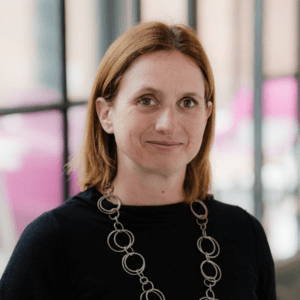
“When I was undertaking new challenges or leadership situations I hadn’t been in before, having someone there as a mentor who you trust and admire, who you know supports you, is so important. To be able to walk them through your planned approach for something and get their input and feedback – it’s not about them giving you all the answers, but helping build your confidence that you are on the right track as you make decisions.”
“Give and Gain”: Mentorship as Leadership Design
The strongest mentorship programmes aren’t ad-hoc relationships; they’re always built around reciprocity. Both sides should use the opportunity to learn and adapt together.
Mentees gain:
- Exposure
- Sponsorship
- A view of strategic decision-making.
Mentors gain:
- Insight into emerging challenges
- Generational perspectives
- Knowledge of how culture feels on the ground.
This two-way dynamic pushes organisations forward in three tangible ways:
- It closes skill gaps in fast-moving areas like ESG and AI ethics.
- It shortens promotion timelines by preparing talent faster.
- It improves retention in roles that are notoriously hard to replace.
Denise’s experience reinforces that this reciprocity is the point, not a by-product:
“For people to get the best from the mentorship programme, both the mentor and mentee have to be committed, investing the appropriate time in it, and coming to the sessions with the best intentions, knowing that they will both likely learn and grow from the sessions.”
Making Mentorship Part of Governance
Boards are beginning to treat mentorship as part of leadership accountability. Culture guidance from regulators has reinforced that sustainable firms don’t just hire capable leaders – they develop them.
From what we’re seeing in the market, effective programmes share a few common traits:
- Clear structure with defined goals and follow-up.
- Visible board backing, giving mentorship real weight.
- Cross-functional pairing to build commercial range and perspective.
- Data-led identification of high-potential talent.
- Measured outcomes, not assumptions.
The result: mentorship that’s trackable, consistent, and directly linked to succession pipelines.
Denise has seen this work at its best when it is “all joined up” with succession:
“When I’ve seen mentorship programmes work at their best, it is all joined up with the succession planning process, which is reviewed with the Board. If someone is identified as a potential successor in future and we identify the development and support they need, we can then select the most appropriate mentor in the business to give them the support. For example, the mentor may be selected from a different area of the business to support the individual to broaden their knowledge or capability in an area, or have a different thought perspective on things.”
Leadership Voices: from HR Initiative to Cultural Norm
Too often, mentorship is still positioned as an HR initiative rather than core leadership work. Denise is clear that this mindset has to shift if companies want genuine impact:
“I believe that mentorship programmes work best when they are integrated with the succession planning process and supported by the business; they aren’t just an HR initiative that the business sees as another drain on it’s time.”
She also stresses that culture is where mentorship ultimately lives or dies:
“It’s most successful when mentoring really becomes part of the culture of the company, and as people get more senior they want and expect to become mentors to others, to ‘Give to Gain’.”
These conversations reinforce a consistent theme: mentorship succeeds when it’s designed, measured, and sponsored from the very top.
What’s Changing in 2026
As fintech boards navigate another year of transformation, mentorship is evolving from a cultural initiative to a structured imperative. The pace of AI integration, rising regulatory expectations, and investor scrutiny around leadership continuity are all pushing firms to formalise how they identify, develop, and retain leadership talent. Female tech-specialist directors still earn materially less than male peers – in some segments over 30% – underscoring the need for targeted sponsorship and visibility in revenue-generating roles.[6]
Key Changes Taking Shape in 2026 Include:
- Strategic alignment: Boards are linking sponsorship and mentorship programmes directly to succession and performance metrics, reporting them at board and investor level to evidence leadership pipeline strength and diversity progress.
- Cross-regional knowledge transfer: With AI, data privacy, and conduct regulation evolving unevenly across markets, firms are pairing leaders across jurisdictions to share real-time governance lessons – for example, a compliance head in Singapore mentoring or co-sponsoring a senior risk lead in London.
- Data-driven matching: AI analytics are increasingly used to match mentors and mentees by capability goals and behavioural complementarity rather than seniority alone, shifting focus from hierarchy to impact.
- Integration with leadership design: Mentorship outcomes are being built into annual talent reviews and leadership capability frameworks, with some fintechs including mentorship participation as a formal leadership accountability metric.
- Cultural multiplier effect: Beyond professional development, mentorship is shaping psychological safety and retention – factors regulators and investors are linking to sustainable performance.
In short, mentorship in 2026 is moving from encouraged to expected, a structural element of leadership design that signals maturity, resilience, and cultural intent.
EC1 Executive’s Perspective
From our vantage point supporting fintech boards globally, mentorship builds leadership depth before it becomes a vulnerability. It expands the bench strength of executive teams, keeps top performers engaged, and shows investors that leadership continuity is being taken seriously.
Across the last year, we’ve seen boards in transformation and infrastructure mandates ask the same question: how do we make succession visible internally before we look externally? Structured mentorship, integrated with succession planning in the way Denise describes, is quickly becoming the preferred answer.
Takeaway
This International Women’s Day, fintech organisations have an opportunity to see mentorship differently: not as support for individuals, but as the architecture of leadership continuity. The best programmes work because they live by the “Give and Gain” principle: both sides grow, and the organisation continues to grow with them.[5]
Sources
- https://www.wibf.org.uk/news/uk-boards-near-gender-parity-but-executive-pipeline-remains-uneven-ftse-women-leaders-review-2026/[4]
- https://www.ey.com/en_uk/newsroom/2026/01/ey-global-financial-services-boardroom-monitor[6]
- https://ftsewomenleaders.com/wp-content/uploads/2026/02/ftse-report-2026-final-online.pdf[3]
- https://ec1partners.com/blog/home-grown-headhunted-leadership-for-fintech/[2]
- https://www.cbinsights.com/research/report/fintech-predictions-2026/[1]
- https://www.internationalwomensday.com/Theme[5]